
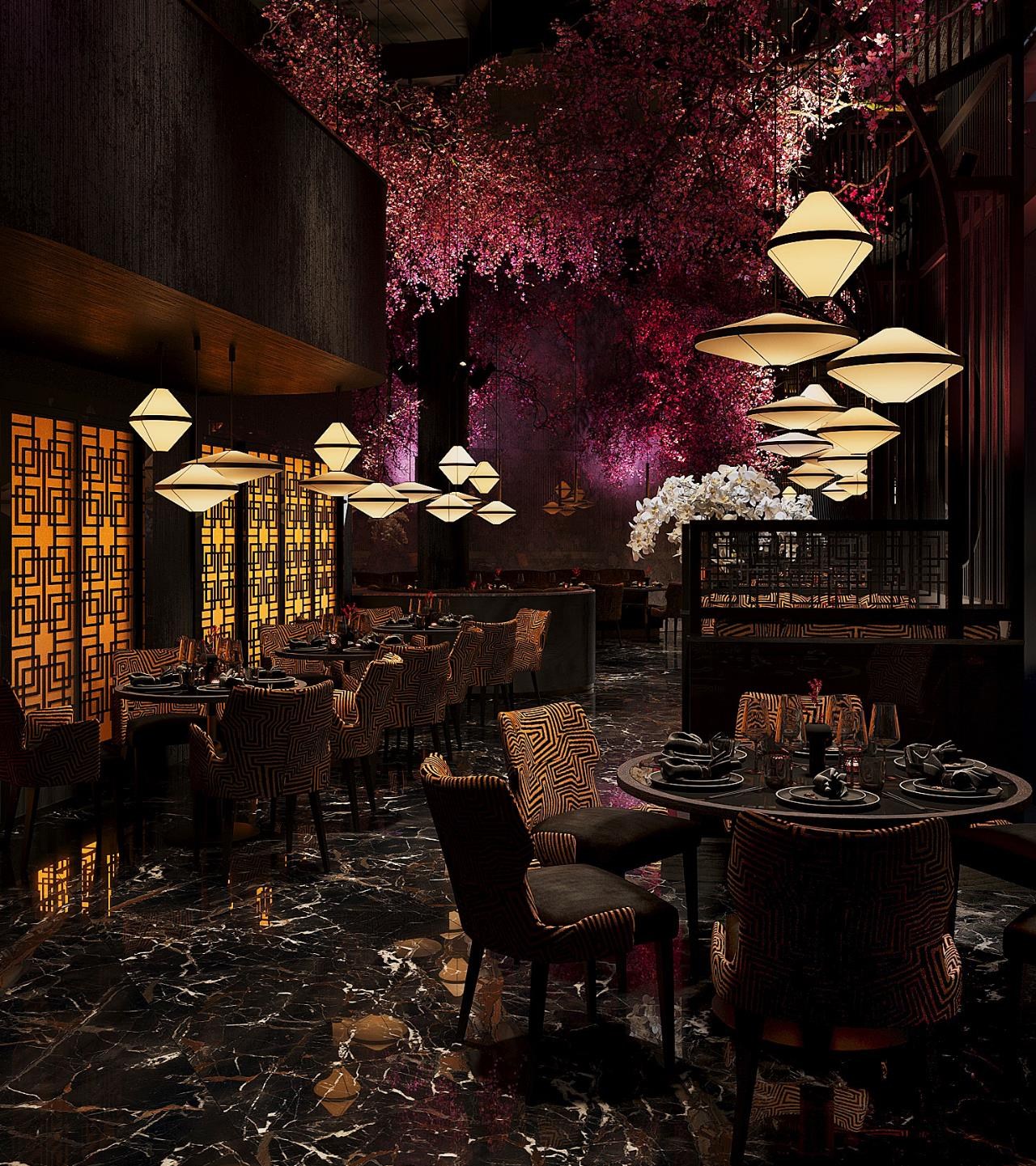
Not just to eat – but because of how the room feels. Because it has something to say.
Every restaurant has a concept – a cuisine, an atmosphere, a type of guest. The design task is to translate that concept into something physical and immediate: materials, light, proportion, furniture, the path a guest walks from door to table.
A great restaurant interior doesn't call attention to itself. It makes the food taste better, the conversation flow more easily, and the evening feel like more than a meal. That is the standard we design to – whether the brief is a fine-dining room, a grand café in a listed building, or a dramatic immersive dining experience.
WHAT Interiors designs hospitality interiors across the UK – from London and Manchester to Luton, Bedfordshire and beyond. Each project begins with understanding what the space needs to say, and how the design makes that happen.
Below are three recent hospitality projects – each with a different brief, a different character, and a different set of constraints.
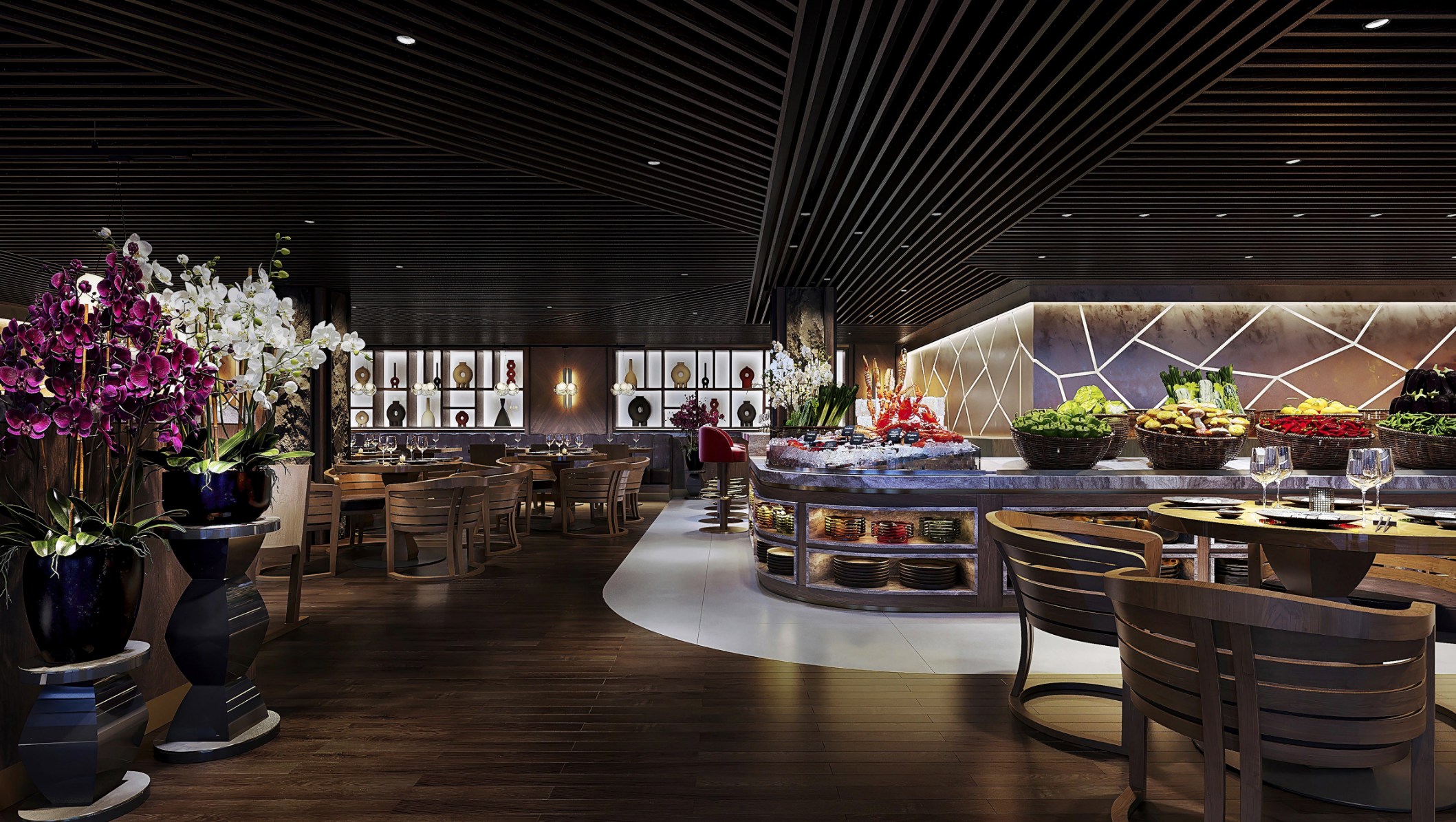
Novikov, Manchester. Main dining room: dark stained timber, oxblood velvet chairs on brass legs, backlit seafood market display.
A pan-Asian restaurant in Manchester where food and fire are the main event. Open robata grill, a sushi counter, a fresh seafood and vegetable market in the dining room itself.
The design principle: a dark stage that lets the food, the fire and the faces of the guests take the light. Dark stained timber, slatted ceiling, oxblood velvet chairs on brass legs – and four carefully placed sources of light that draw the eye from scene to scene.
Read the full case study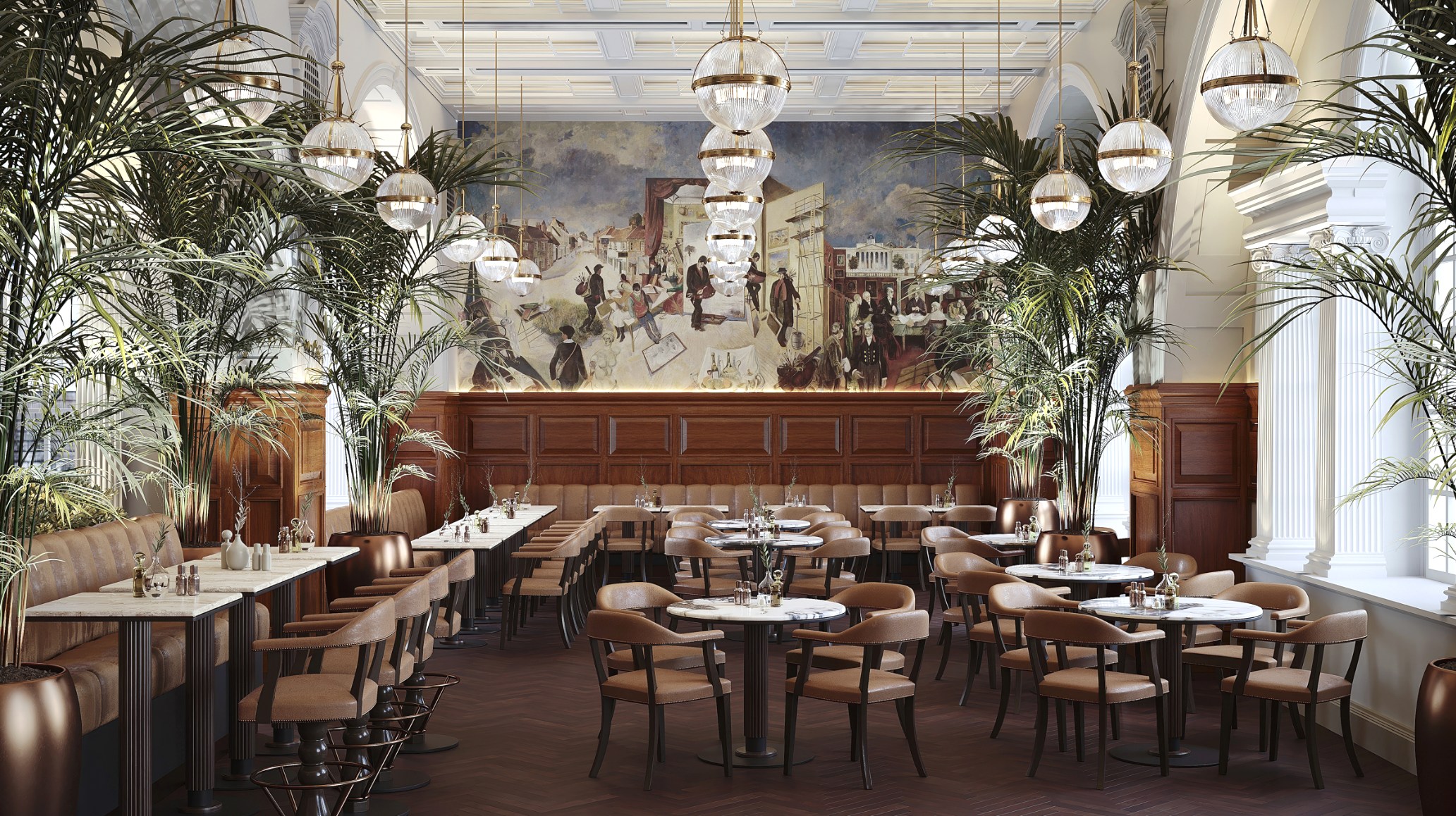
The RA Café, Royal Academy of Arts, Burlington House, London. Walnut panelling, travertine tops, live palms and a curved bar in green glazed tile.
A grand café inside the Royal Academy of Arts – one of Britain's oldest art institutions. The brief was unusually delicate: place a busy public café inside a listed heritage building without competing with it, and without being lost inside it.
Working under heritage constraints, we added a warm layer over the building's white coffered ceilings and Ionic columns – walnut panelling, tobacco leather, travertine, a curved bar in moss-green glazed tile. A room that feels native to the Academy, not inserted into it.
Read the full case study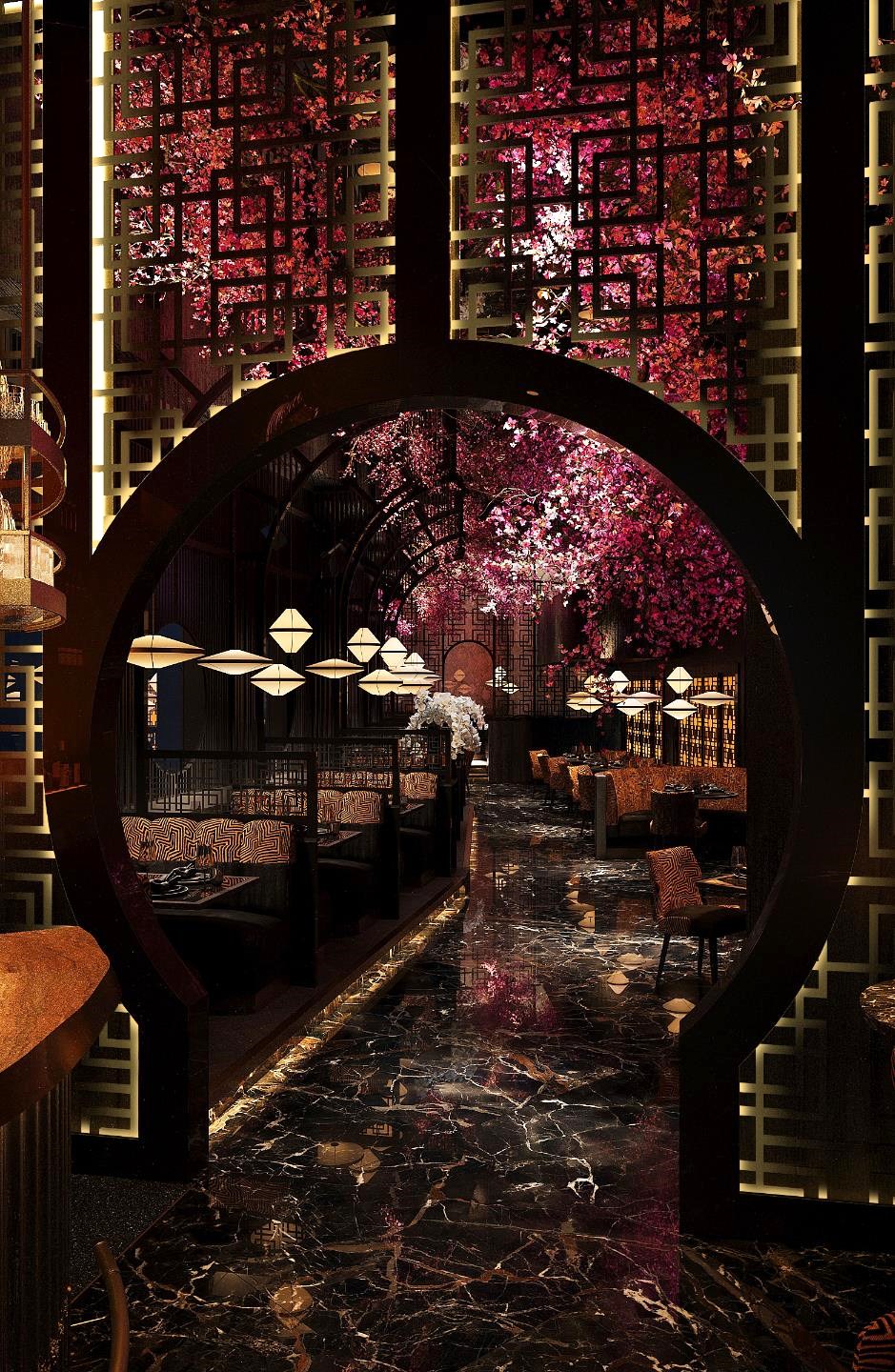
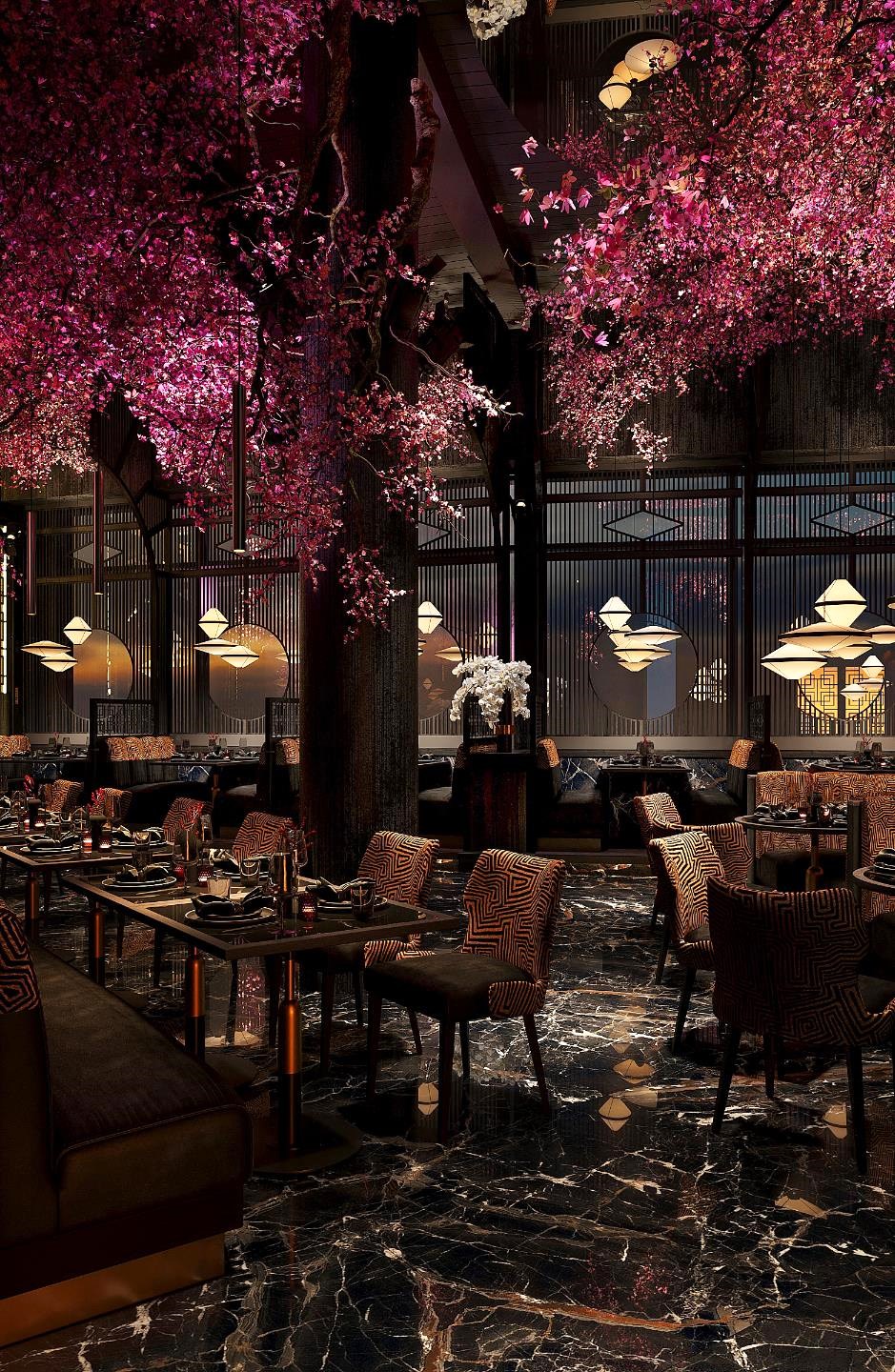
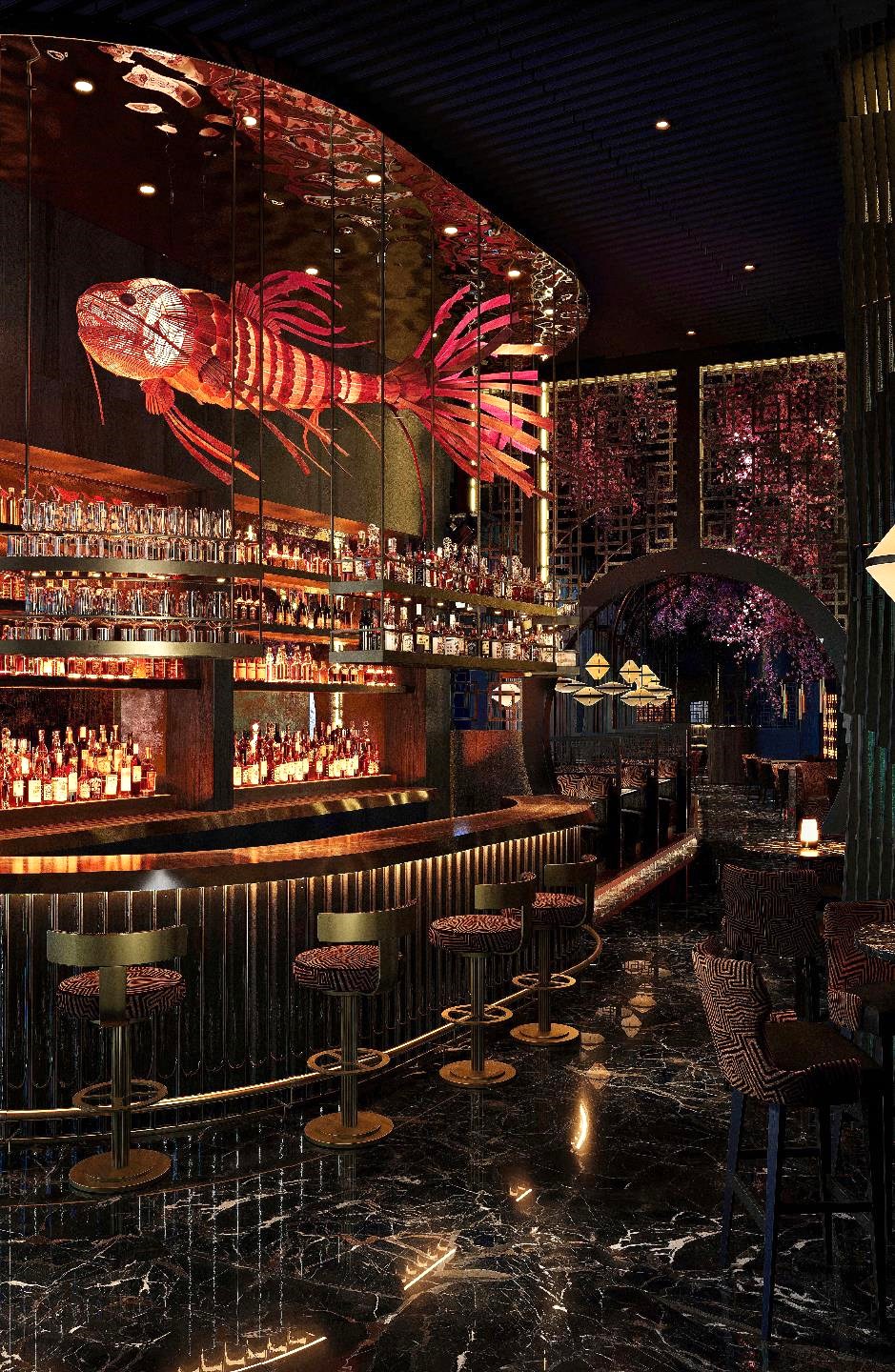
An Asian fine dining restaurant built around a single, defining idea: a forest of full-height cherry blossom trees filling the dining room from floor to ceiling. The blossom is not decoration – it is the room.
Everything else – dark Portoro marble floors, golden backlit lattice screens, diamond-shaped pendant lights, a moon gate arch – exists to frame and amplify that central image. Theatre, not ornament.
A restaurant that has something to say is a restaurant people return to.Iuri Colomiet, lead designer
WHAT Interiors designs fine dining restaurants, cafés, bars, hotel dining rooms and private dining spaces across the UK. Recent projects include Novikov Restaurant in Manchester, The RA Café at the Royal Academy of Arts in London, and Noshi Restaurant.
Yes – we work across the UK. Completed projects include Novikov Restaurant in Manchester and The RA Café in London. We travel to clients and manage projects remotely where needed.
Yes. The RA Café at the Royal Academy of Arts, Burlington House, was completed within strict heritage and conservation constraints. We have direct experience navigating planning and listed-building requirements.
Timescales vary by scope. A new restaurant concept from brief to opening typically takes 4–8 months. We provide a project programme at the start of each engagement and manage the full process through to opening day.
A new opening, a refit, a heritage interior –
tell us about the project and we'll start with a conversation.